I recently purchased a Mallincam DS26cTEC Video Astronomy camera that has a large 28.3mm Class 1 CMOS sensor with 6224x4178 resolution. I have been very pleased with my existing DS10c, but had been thinking about getting a TEC camera for active cooling and greatly reduced hot pixels. When I heard about the DS26cTEC, I decided that was the TEC camera for me to move up to with an even bigger FOV, higher resolution and increased sensitivity.
Here are some of my first thoughts about the DS26cTEC…
1. The larger chip produces a very nice Field of View (chip diagonal 28.3 vs 21.63mm for DS10c)
2. Its smaller pixel size produces higher resolution detail (3.76 vs 4.63 microns for DS10c).
3. This is a lot of pixels (26.1 vs 10.7 megapixels for DS10c)!
4. The sensitivity is extremely good. When using 2x2 binning, it is awesome. I have also tried 3x3 and 4x4 binning with decent resolution. When using different binning settings, the FOV remains the same.
5. The TEC cooling produces very pleasing images without having to use darks (it uses the same cooling system as DS10cTEC version). Moving to a camera with TEC cooling does require a second cable to the camera for power, but I was able to easily figure out how to route the power cable at the telescope up to the camera.
6. No amp glow (same as DS10c).
7. I find using the Region of Interest (ROI) setting in MallincamSky is really effective with this camera for “zooming” in on your target and only stacking the pixels you are interested in. This also reduces the file size of saved images.
On the left is a picture my new black DS26cTEC next to my blue DS10c (which does not have TEC cooling), and on the right a picture of a black DS10cTEC (with cooling).
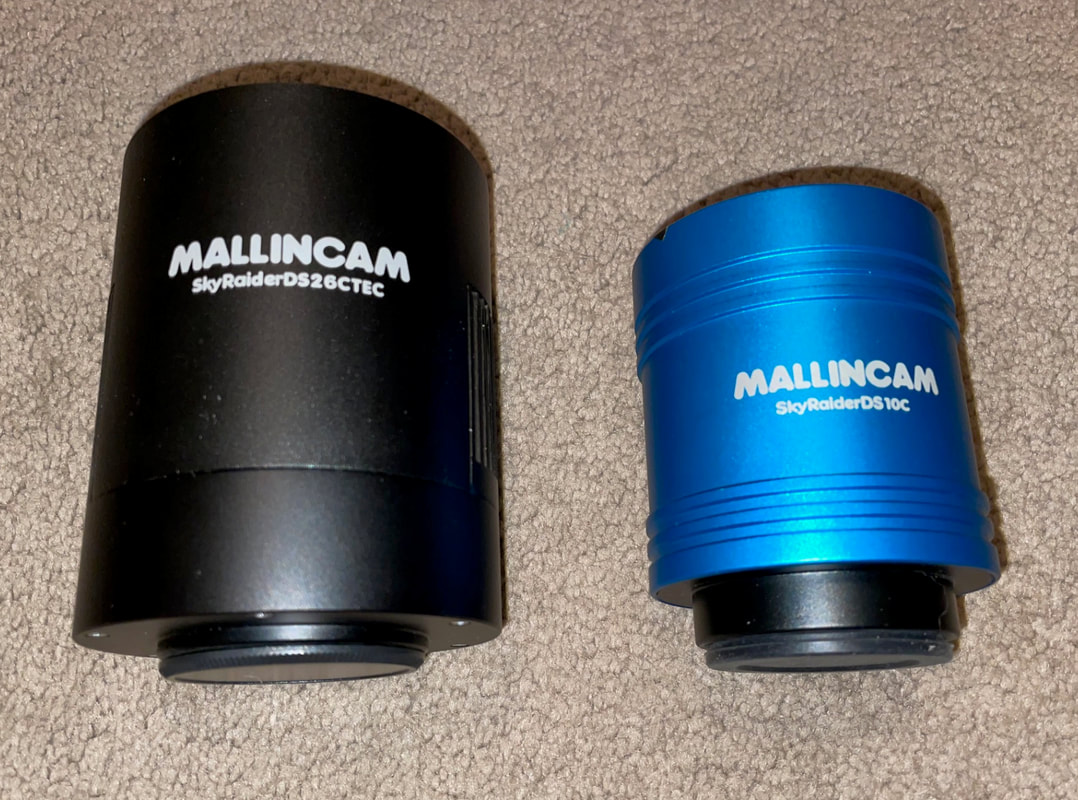 |  |
As you can see in the image on the right of a DS10cTEC, the addition of the TEC cooling feature increases the size of a camera, and it is worth it!
The MallinCam website describes the TEC feature this way. “MallinCam developed a unique cooling system that provides no direct physical contact between the Peltier cooler and the sensor. Instead, the Peltier cooler creates a convection system “refrigerator-like” environment that cools the sensor without actually contacting it. This cooling system is unique to MallinCam and not found on other astronomical imaging cameras.” … “ MallinCam has successfully designed a working alternative - a cooling chamber called refrigeration cooling - which subjects the CMOS sensor to cooling inside a triple sealed vacuumed sensor chamber controlled with a heating element mounted around the internal optical window to control and avoid dew formation on the optical window and surroundings. A vacuumed sealed chamber is used to eliminate the use of desiccant material and keep dew free environment permanently.” … “The result of this new technology [is it] will not require a dark frame for live application or imaging in most cases.”
My blue DS10c is a great camera. You can see my most recent images using the DS10c in my 10/24/2020 blog “Dark Skies in Oklahoma”. My DS10c produces nice images as long as I use darks to reduce the effects of hot pixels. I have to use darks most of the time with my DS10c - too many distracting hot pixels in the southern summers here if I didn't use darks (since my DS10c does not have TEC cooling). I found darks worked best when the darks were captured at similar settings as the image (Exposure, gain, histogram, etc.) This helped reduce the distracting pixels, but took up some of my time that I could have been viewing. That is one reason I wanted to get a TEC camera so I could quickly experiment with different settings to obtain the best image while viewing. With TEC cooling, there are very few hot pixels and average stacking does a pretty good job of reducing the distraction of any remaining hot pixels for near real-time viewing.
I know others with the DS10cTEC have success viewing without having to use darks due to TEC cooling. So far, I feel like I made the right choice for me to step up to the DS26cTEC to be able to “view” without having to capture and apply darks and getting a larger chip size/FOV and higher resolution.
I am still learning about using the TEC cooling. I use with the recommended default of 0 C (it now shows 32 F on my screen since I changed my preference setting to F). At the end of a session, I turn off the TEC cooling but let the fan run for a few minutes until the temp in the lower right of the screen reaches ambient temp and then I close MallincamSky and turn off power.
So far I have only had a few nights I could try the DS26cTEC out (mainly because of weather). Here are images from the DS26cTEC on three telescopes that will give you a feel for the Field of View with this chip size. I will happily note that I did not capture/apply any darks when capturing images shown in this post.
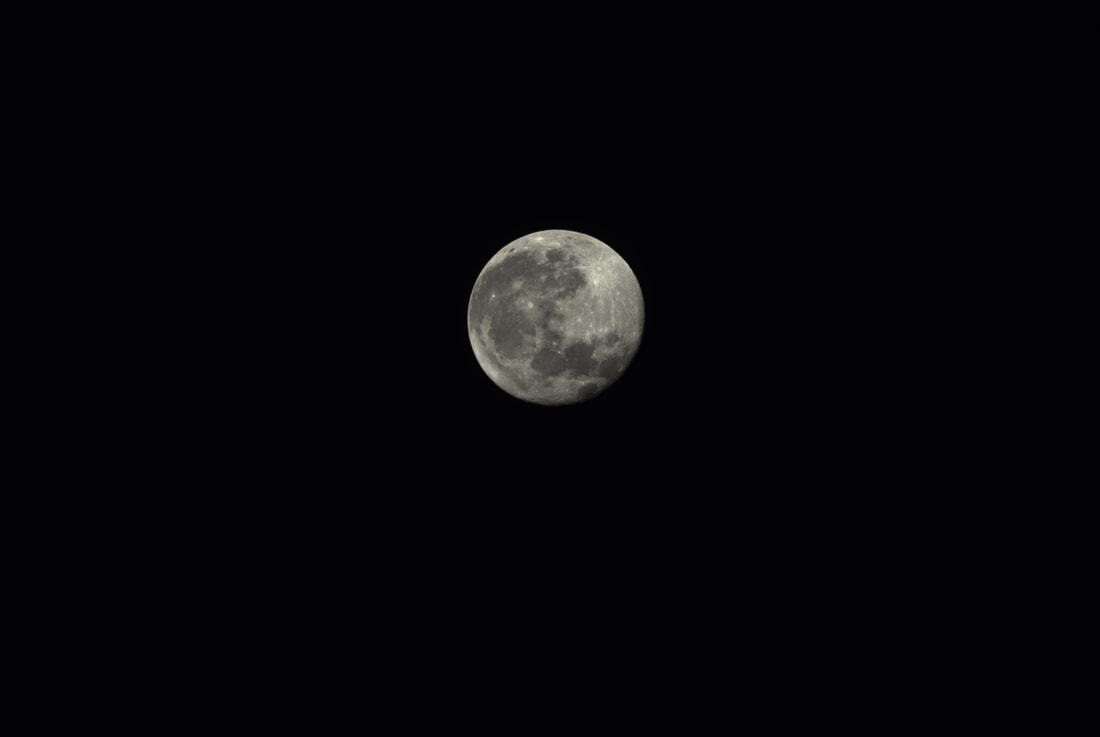
My first light with the DS26cTEC was of the moon using my MCR-80 F5 refractor.
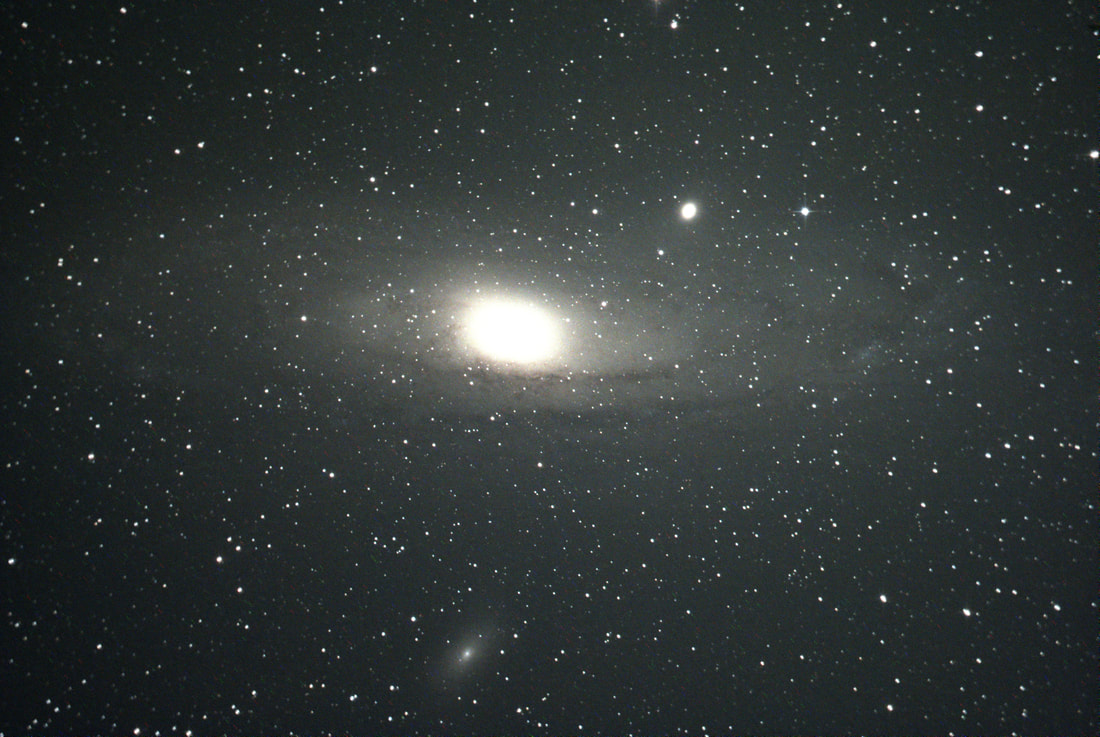
Here is a nice image of Andromeda (M31) on a Newtonian 130mm (5”) F5 reflector.
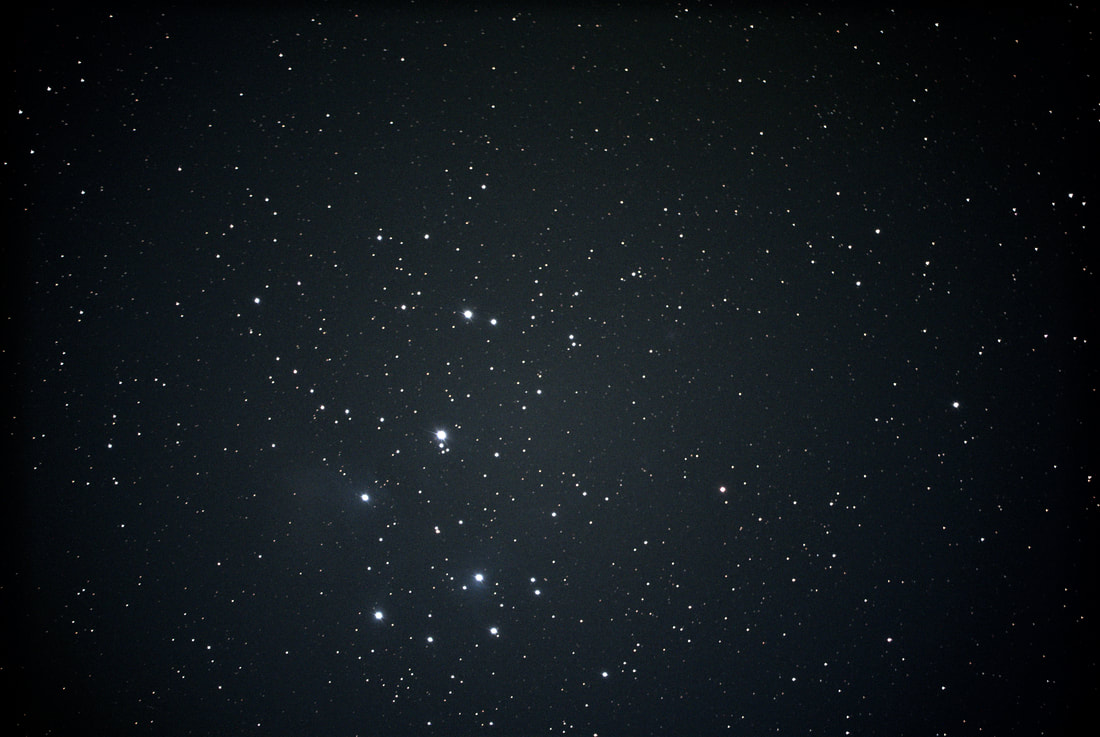
This image of the Pleiades (M45) gives a good idea of the FOV using my 8” Schmidt-Cassegrain with Hyperstar at F2.
Using the Region of Interest (ROI) feature of MallincamSky is a great way to just view your target area of interest and only average stack the image portion you need. I noticed using ROI makes the stacking process more efficient and faster for the DS26cTEC compared to stacking the full FOV image resolution of 6224x4186. Also with ROI, saved images only include your target region resulting in smaller image files. Combining ROI with 2x2 binning can be a powerful combination with this camera. Due to the small native 3.76mm pixel size, using 2x2 binning still produces an image with good resolution.
The latter part of November we took our RV to a campground with a Bortle 4 rating. Rain was predicted for the first two nights and the third night was questionable. So I just took my easy setup SkyProdigy Mount (with StarSense) and the 130mm Newtonian F5 reflector that came with it. Back in 2014, the second blog post I made on my RemoteVideoAstronomy.com site on 11/17/2014 was titled “A good beginner telescope for RVA” and I used the Mallincam Micro on it. Fast forward to 2020 and I still use this telescope and mount for trips where I “might” have a viewing night. It paid off for the first part of the last night at this campground with a clear dark sky.
So here are some examples of putting an amazing DS26cTEC on the “little telescope that thought it could” at a Bortle 4 campground. These are all on a 5” Newtonian reflector at F5 using the DS26cTEC with 2x2 binning under clear dark skies.
In the following 3 examples the original field of view image is on the left and the image with ROI enabled is on the right.
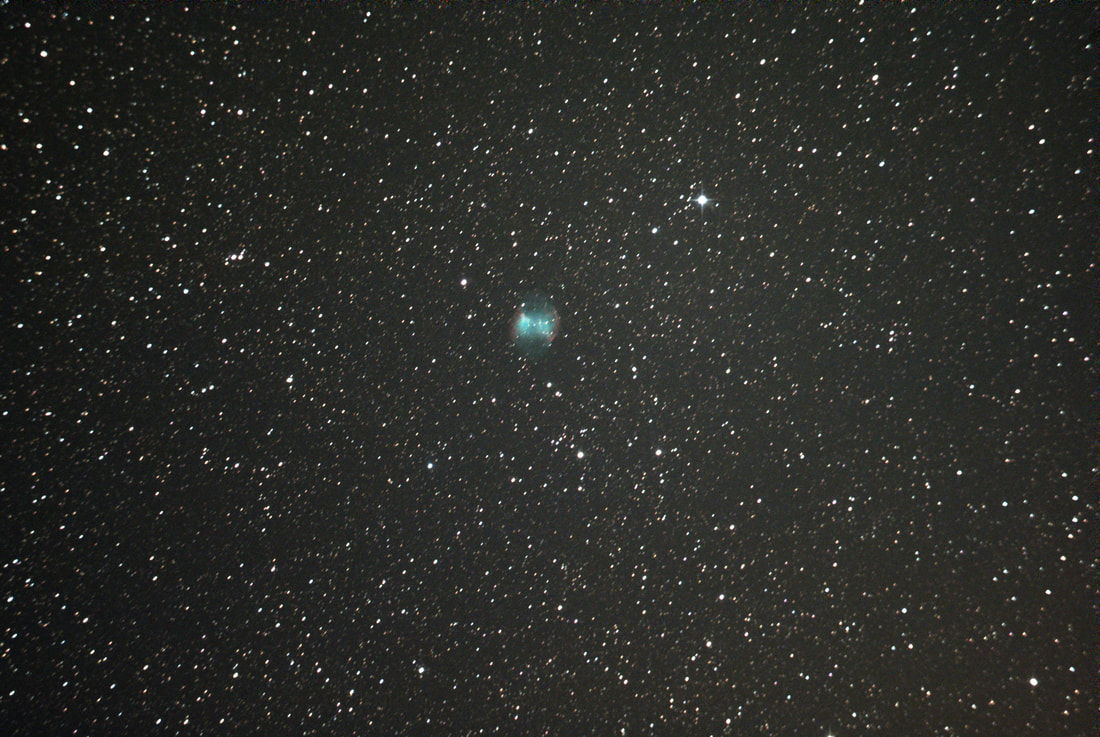 | 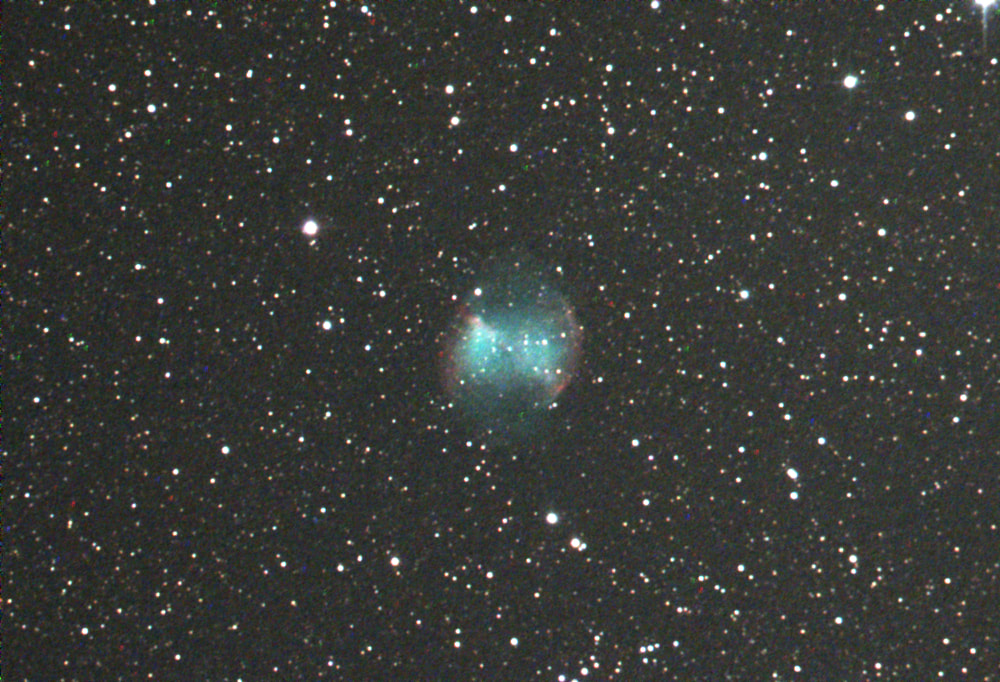 |
M27 (Dumbbell) at 3 secs 100 gain 10-75 histogram 10 stacked 2x2 bin
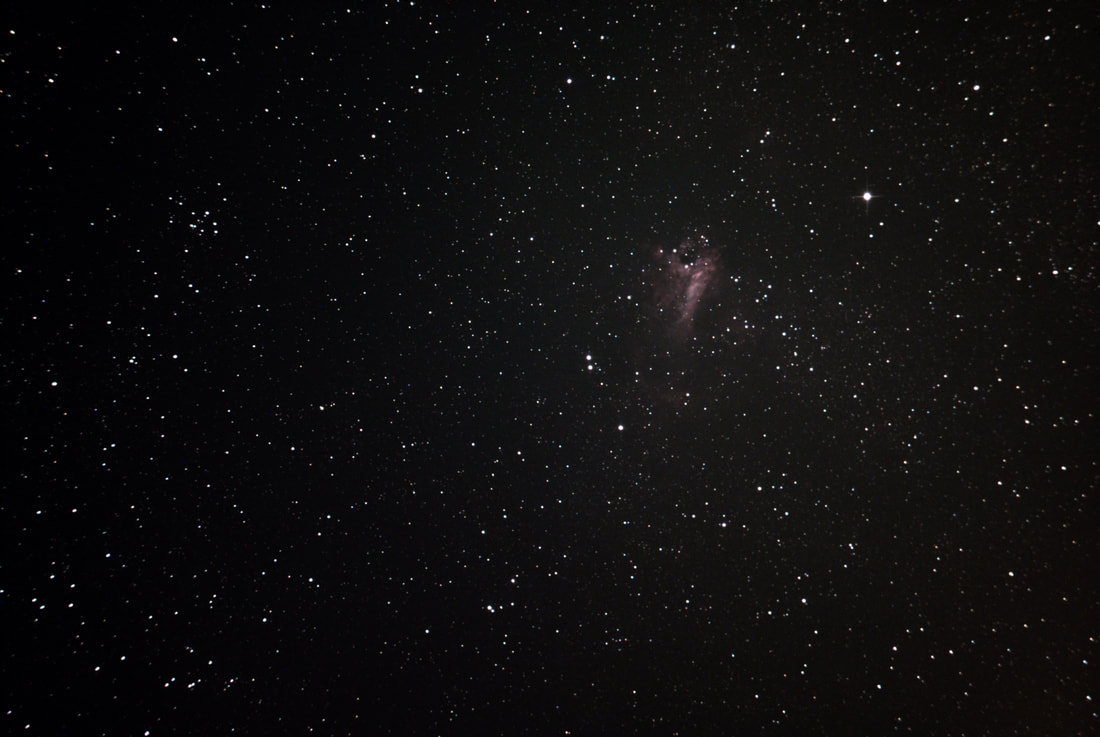 | 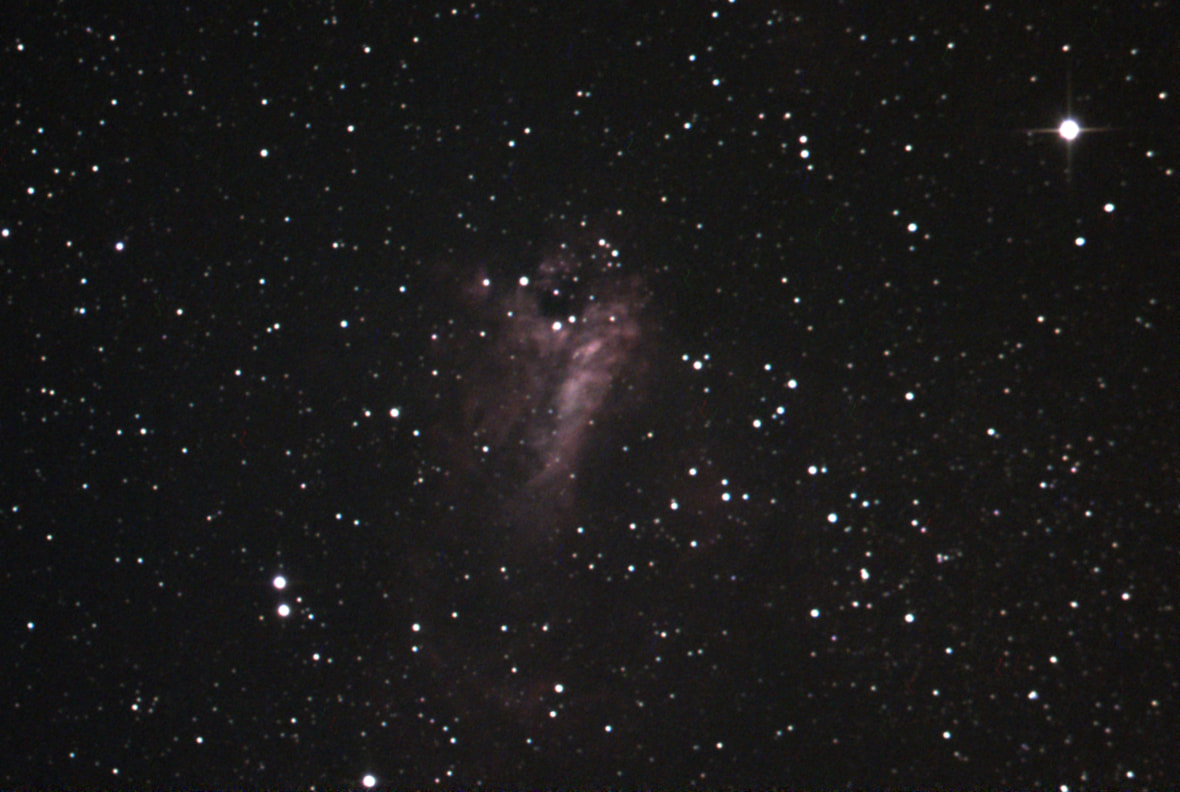 |
M17 (Omega/Swan) at 2.2 secs 100 gain 45-200 histogram 22 stacked 2x2 bin.
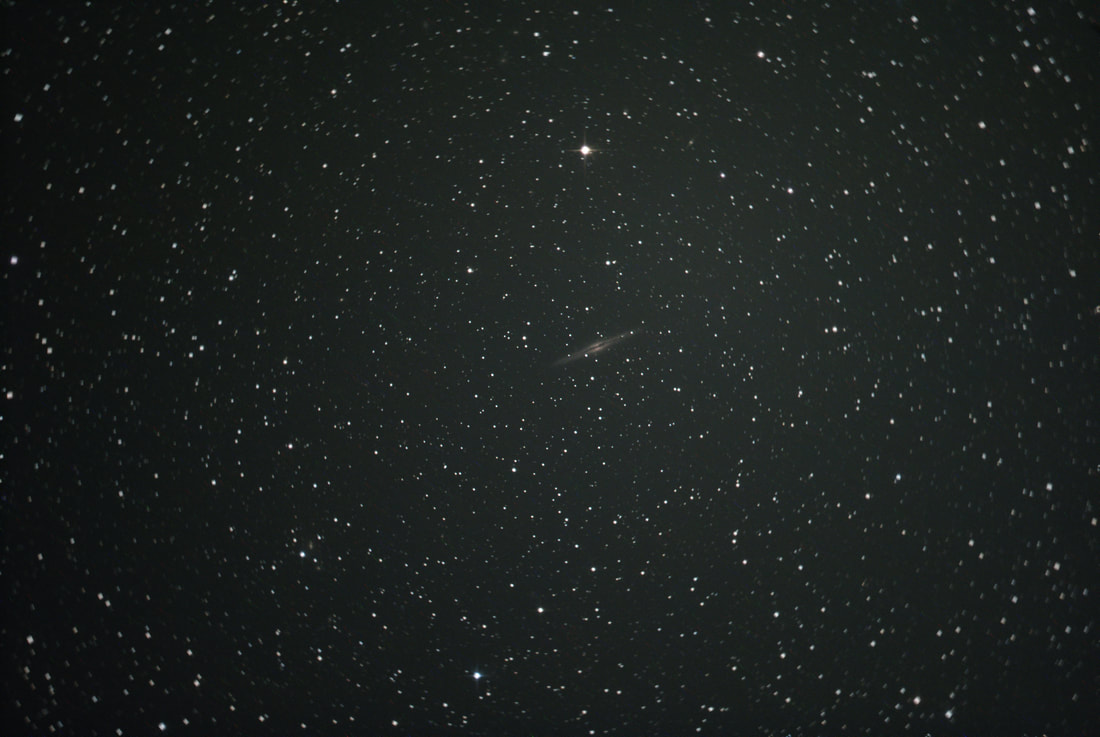 | 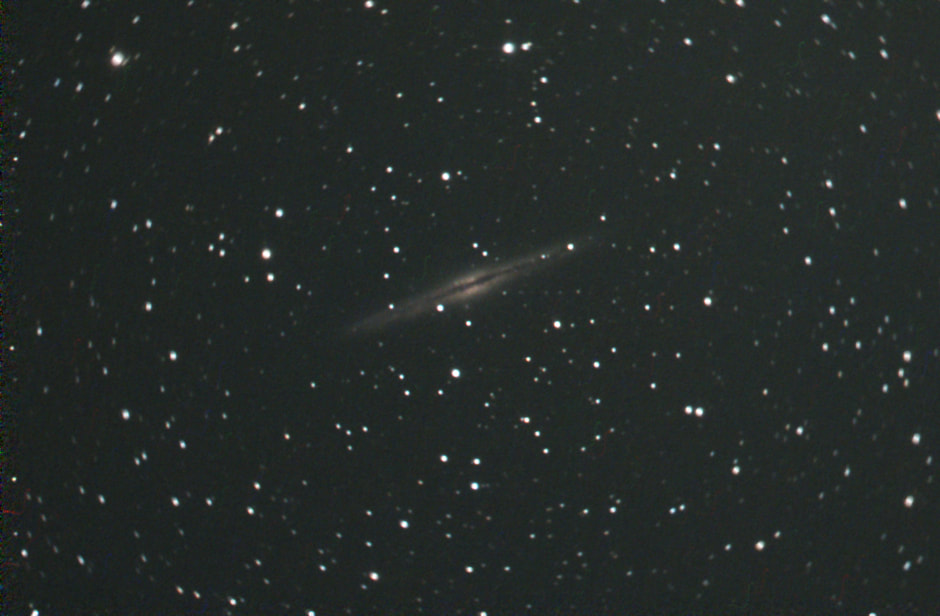 |
NGC8912 (Spiral galaxy) at 5 secs 100 gain 12-100 histogram 10 stacked 2x2 bin.
Here are a couple of examples of just an ROI image using Live High Dynamic Range (LHDR) technique where some settings are changed during the stacking process:
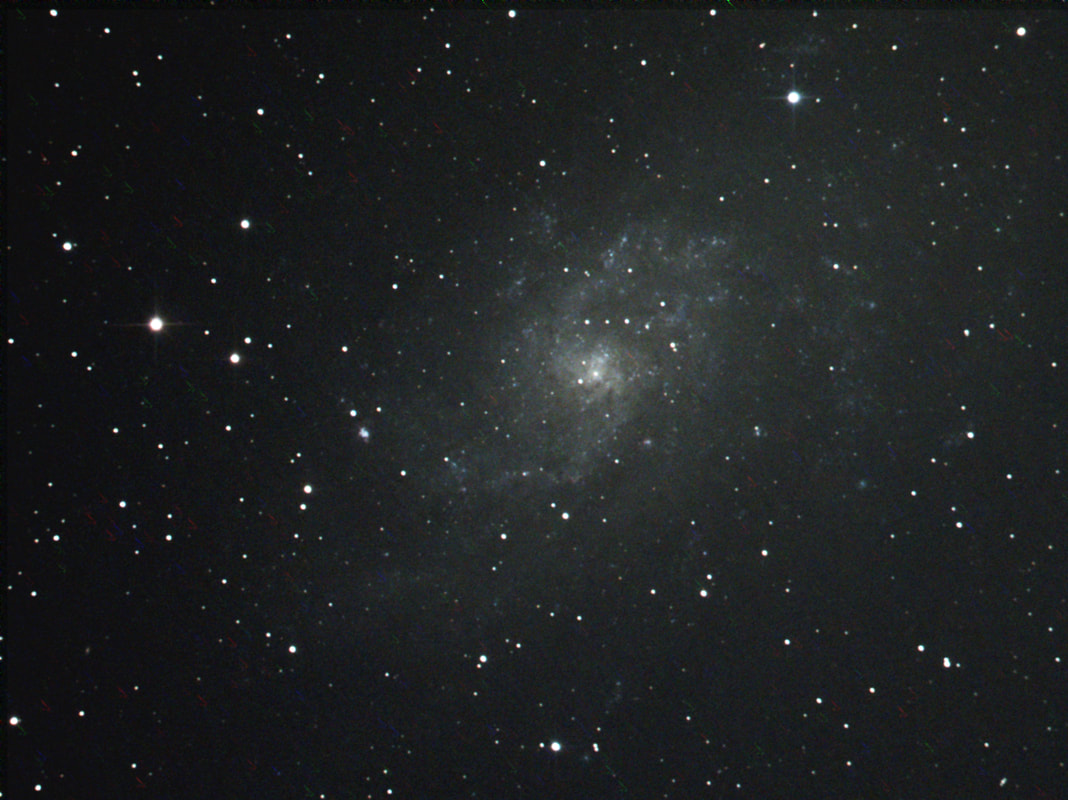
M33 (Triangulum/Pinwheel) 5 secs 100 gain 20-135 histogram 10 stacked then 25-75 histogram 20 more stacked (LHDR) 2x2 bin
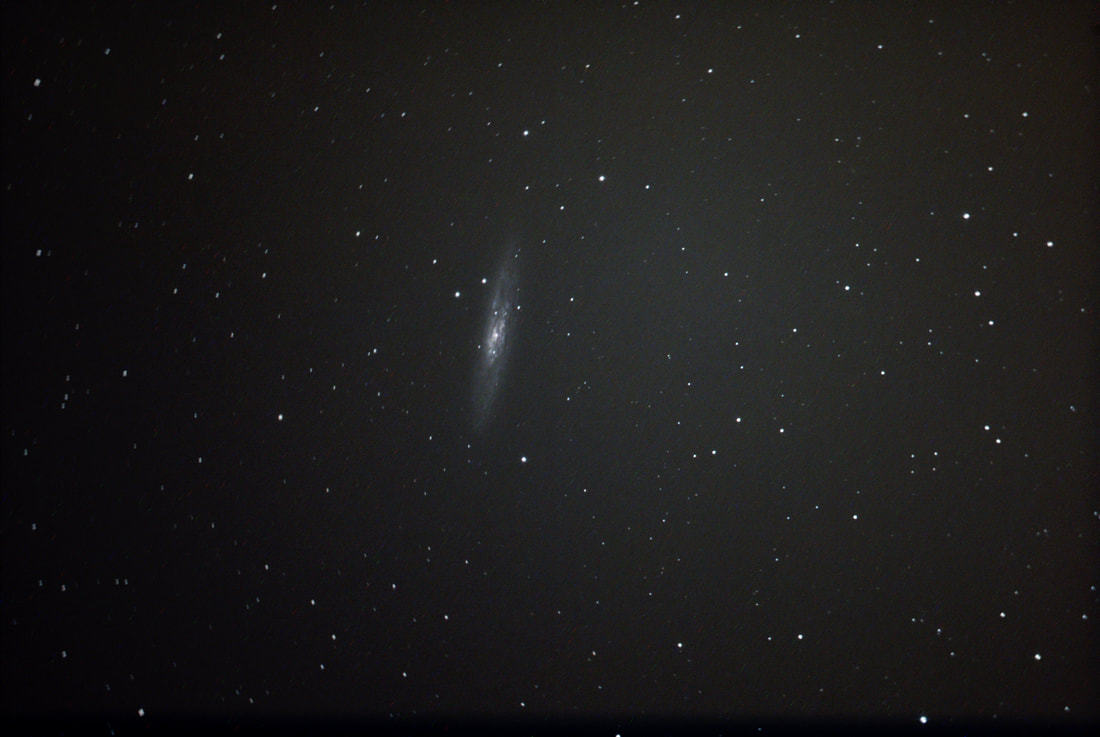
NGC253 (Sculptor/Silver Dollar) 4 secs 100 gain 64-200 histogram 10 stacked then 64-150 histogram 10 more stacked (LHDR) 2x2 bin
Back at home, I captured an image of the Orion Nebula using my Celestron 8” SCT with the Universe Focal Reducer and a 10mm spacer. There is a little vignetting with the 10mm spacer (another day I tried the Universe Focal Reducer without a 10mm spacer and it greatly reduced the vignetting effect).
In the following image I used the LHDR technique at 100 gain 0-255 histogram and varied the exposure from 1s,2s,3s,4s,5s and then changed the histogram to 0-50 for the remaining time. Interesting combination. There were 35 total images average stacked. I did a quick enhancement (<1min) of the final image using Microsoft Photo editor for it to show up better on the web.
In the following image I used the LHDR technique at 100 gain 0-255 histogram and varied the exposure from 1s,2s,3s,4s,5s and then changed the histogram to 0-50 for the remaining time. Interesting combination. There were 35 total images average stacked. I did a quick enhancement (<1min) of the final image using Microsoft Photo editor for it to show up better on the web.
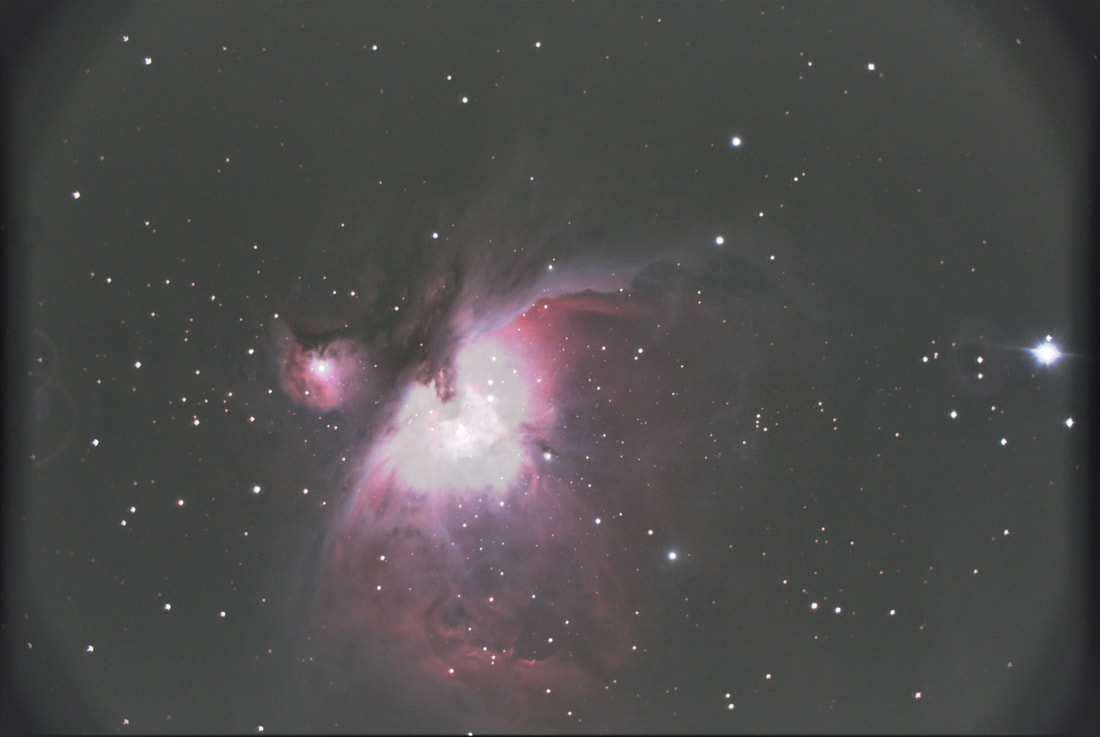
m42 (Orion Nebula) 1s..5s 100g 0-255h..0-50h 35stk
I will have to say I am very pleased with my new DS26cTEC! I hope to soon try it out more on my 8” SCT with Hyperstar at F2.
 RSS Feed